
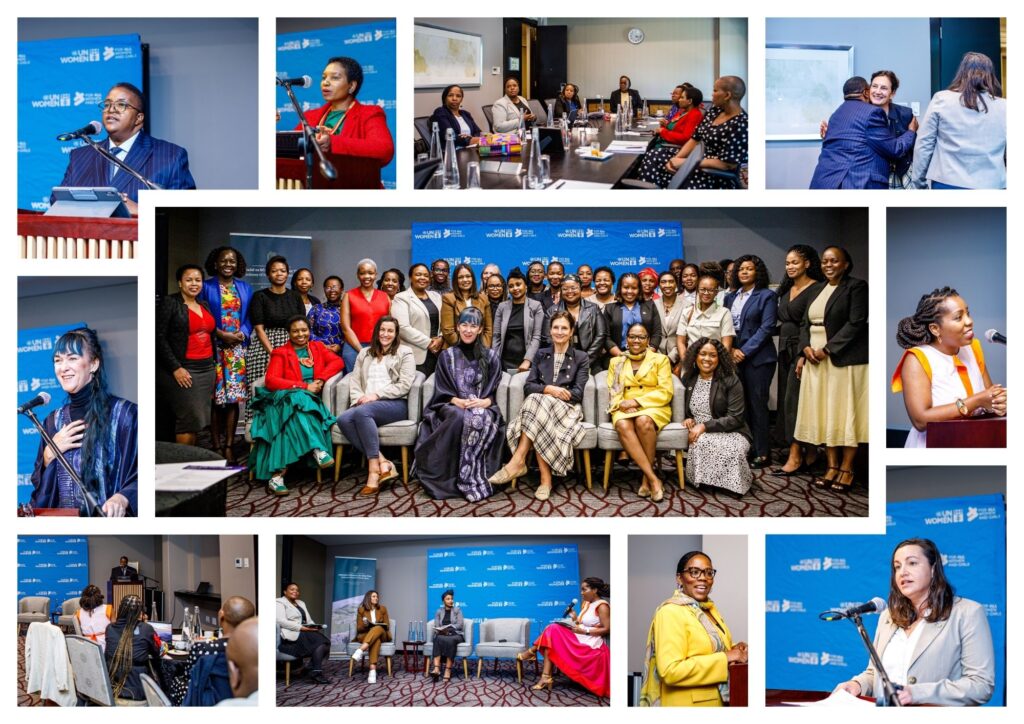
To commemorate International Women’s Day 2026, fraycollege, in partnership with UN Women South Africa and the Embassy of Ireland in South Africa, convened leaders in Johannesburg on 10 March 2026 for a gathering under the theme Rights. Justice. Action: Advancing Gender Equality in South African Workplaces.
The event brought together participants from the banking, mining, media, civil society, academic, agriculture, government and construction sectors to reflect on how individuals and organisations can continue advancing gender equality in the workplace. The gathering created an important space for dialogue, learning and collaboration among leaders committed to building more inclusive and equitable working environments across South Africa.
Discussions were grounded in the legacy of the women who marched to the Union Buildings in Pretoria in 1956 to protest apartheid pass laws imposed on African women. Nearly seventy years ago, thousands of women travelled from towns, villages and farms across South Africa to stand in silent protest before breaking into song with the powerful refrain: “Wathint’ abafazi, wathint’ imbokodo.” Their actions were not only a fight for their own rights but also a powerful act of solidarity for future generations.
Deputy Minister of the Department of Women, Youth and Persons with Disabilities, Mmapaseka Steve Letsike, reflected on how the struggle for equality has evolved.
“Today’s pass laws do not appear as documents carried in handbags or pockets,” she said. “They appear in unequal pay structures, unsafe workplaces, discriminatory hiring practices and the persistent undervaluing of care work.”
While women are entering and leading across more fields than ever before, patriarchal norms continue to shape many workplace environments. Keynote speaker Dr Sibongile Vilakazi shared personal experiences from her leadership tenure as President of the Black Management Forum, highlighting how misogyny and bias can persist even at senior leadership levels.
She also emphasised that gender equality cannot be pursued in isolation. Black women, rural women, women with disabilities, working-class women and LGBTQI+ individuals often experience overlapping forms of discrimination that require intersectional responses in policy and organisational culture.
Throughout the event, discussions focused on practical strategies for advancing gender equality. Participants joined three masterclasses addressing the gender pay gap, workplace responses to gender-based violence and harassment, and the impact of care responsibilities on women’s economic participation and leadership opportunities.
In the session on creating safe workplaces, Koketso Rathumbu of the GBVF Response Fund emphasised that organisations must move beyond policy commitments to real implementation. Participants highlighted the need for survivor-centred reporting mechanisms, protection from retaliation and stronger governance oversight.
Norma Mazibuko, Partner and Master Reward Specialist at Bowmans, highlighted the importance of pay transparency in closing gender pay gaps and enabling women to negotiate salaries more effectively. Dharshni Padayachee, Human Capital and Finance Executive at Rand Merchant Bank, emphasised the need for equity in workplace policies that recognise realities such as pregnancy and menopause.
By the end of the gathering, participants left with renewed motivation as well as practical knowledge, tools and strategies to strengthen their advocacy for gender justice within their organisations and communities. The discussions reinforced a clear message: advancing gender equality requires sustained commitment and collective action.

fraycollege Reporter