Op-Ed | Written by Sylvia Ezenwa-Ahanene
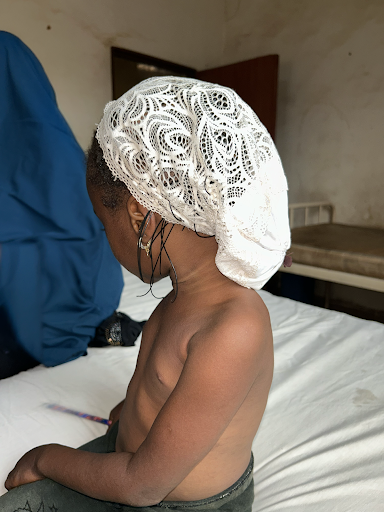
Somewhere in Northern Nigeria, a four-year-old girl was battling measles infection at home. Her mother, who feared the cost of treatment at the nearby health center, kept her child away from her at home. The girl showed the classical symptoms and signs of measles, such as high fever, cough, runny nose, tiredness, diarrhoea and maculopapular rash.
A community healthcare worker discovered the child’s condition, and a Rapid Response Team was quickly mobilised to the community. The team encouraged the mother and assisted her to go to the local health center where the child eventually received free treatment.
The mother was relieved when she realised that she would not have to pay for her daughter’s treatment. The little girl recovered and returned home, healthy, safe, and smiling.
Unfortunately, this is not an isolated case. In low and middle-income countries, including Nigeria, many children still face preventable diseases like measles often without access to timely care.
Measles is an acute infectious disease that spreads quickly via air droplets and direct contact. It affects the respiratory and other systems in the body. It is one of the leading vaccine‑preventable diseases of children worldwide. However, Africa bears the lion’s share of the disease burden worldwide.
According to the Centre for Disease Control and Prevention (CDC) the 2024 global rate of immunisation showed some improvement, thanks largely to targeted Supplemental Immunisation Activities (SIAs). The supplemental immunisation activities reduced the number of cases by 15 % compared to data from 2023, which showed a spike.
Measles still constitutes a significant health challenge in Nigeria, especially amongst the under 5. The outbreaks are still occurring in the country despite the presence of safe and effective vaccines. The challenges responsible for it are suboptimal routine immunisation coverage, population movements, and gaps in the immunisation program. The recent 2025 surveillance reports of the Nigeria Centre for Disease Control and Prevention (NCDC) are quite concerning. Thousands of suspected and confirmed measles cases were observed in the country between 2023 and early 2025. Outbreaks in the country were recorded in several Local Government Areas involving almost every state.
Serial situation reports by NCDC have consistently shown that states in the Northern geopolitical zones have the greatest burden. These states involved include Borno, Katsina, Kaduna, Adamawa, Bauchi, Jigawa, Kebbi and Yobe. Among these states, Borno and Katsina rank the highest. These states have consistently recorded measles outbreaks, underscoring persistent immunity gaps, particularly among zero-dose and under-immunised children (NCDC, 2024; 2025).
On the contrary, NCDC reported a lower incidence of measles has been reported in the southern part of Nigeria and more urbanised states like specifically Lagos State.
This trend aligns with the regional variations in the immunisation coverage and healthcare access. The Northern states generally have lower routine immunisation coverage than the Southern states. The noted spatial heterogeneity of measles transmission is a significant indicator for the urgent need for interventions to strengthen routine immunisation systems, sustain high-quality supplementary immunisation activities and close immunity gaps among vulnerable populations.
The first dose of the measles-containing vaccine (MCV1) was introduced into Nigeria’s routine immunisation schedule in 1978. However, there were repeated outbreaks noticed mainly in the northern states, due to low routine immunisation (RI). This was observed to be caused by limited access in insecure areas and vaccine hesitancy. A second dose of the measles vaccine (MCV2) was added to the routine immunisation schedule between 2019 and 2021 to close the gap. Measles-containing vaccines are targeted at children aged 9 – 15 months. Supplementary immunisation activities have helped improve vaccine reach, especially for children missed by routine immunisation. However, according to Olayinka et al. 2024, the continued recurrence of outbreaks raises questions about how effectively supplemental immunisation activities are reaching zero-dose children, particularly in high-burden states like Borno State. In 2024, NCDC reported that 72.64% of the 9,821 confirmed cases had not received any dose of the measles vaccine (“zero doses”).
Even though regular immunisations and special supplemental immunisation activities have helped to reduce the burden of measles in Nigeria, the battle has not yet been won. The presence of a significant percentage of zero-dose children in the high-risk areas is of great concern.
Currently, Nigeria is implementing a nationwide Measles–Rubella vaccination campaign, targeting children aged 9 months to 14 years. This campaign, which reaches children missed by routine immunisation, is being rolled out in phases across high-risk northern states and will later be commenced in southern states. Through free delivery of vaccines through community outreach and house-to-house visits, the campaign aims to close immunity gaps, prevent future outbreaks, and protect millions of children from this preventable disease.
Through increasing focus on supplemental immunisation activities in the areas where it is most needed, strengthening of standard services, and use of community trust, Nigeria will be able to advance towards a regional objective of eliminating measles by 2030. This will ultimately save the lives and improve the health of children.
The story of the little girl is a reminder that behind every statistic is a child whose life can be saved. Nigeria has the tools, vaccines, and manpower to deliver this. What is needed now is commitment, access, and action. Every child deserves the chance to grow up healthy. Measles should not be the cause of another preventable death. Let us all embrace and support measles immunisation nationwide.
Sylvia Ezenwa-Ahanene (MPH) is a Senior Surveillance/Health Emergency Preparedness and Response Officer at the Nigeria Centre for Disease Control and Prevention (NCDC). She is also a fellow of the African Health Communication Fellowship, EmpowerHer Fellowship, Nigeria Malaria Modelling Fellowship and SACEMA Measles and Polio Policy Modelling Fellowship.