
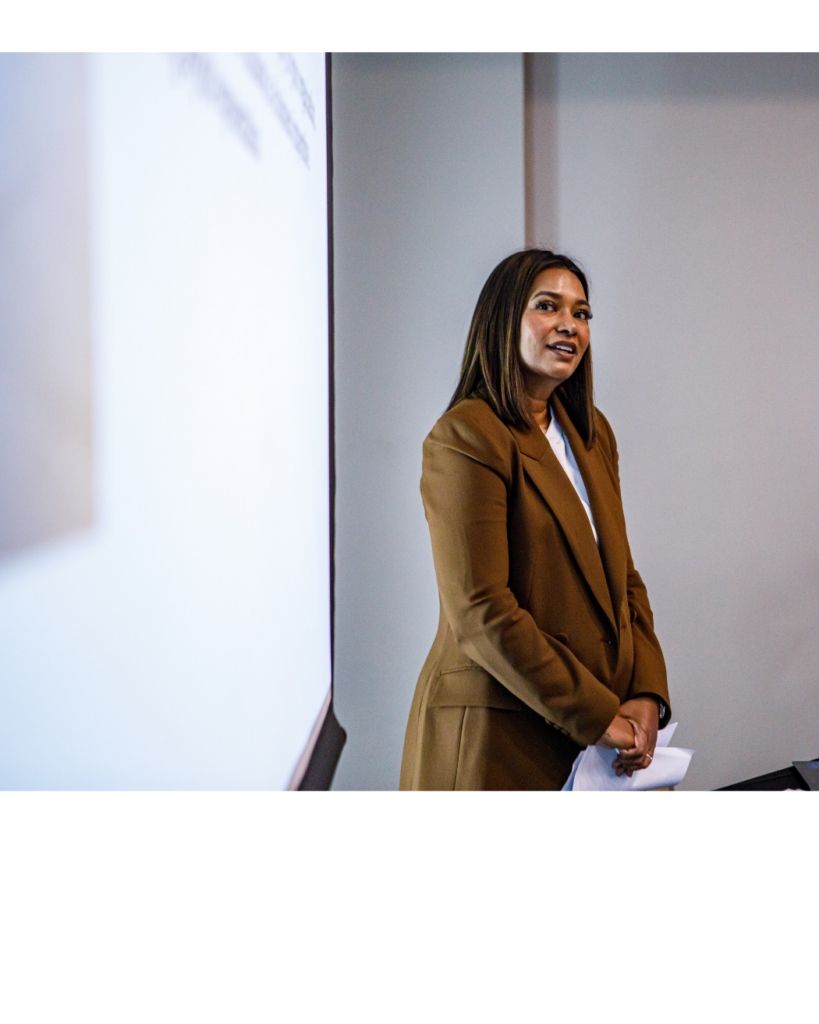
During our event to commemorate International Women’s Day 2026, we had three masterclasses on closing the gender pay gaps, gender-based violence and harassment in the workplace, and the impact of care responsibilities on women’s economic participation and leadership opportunities.
Dharshni Padayachee, Human Capital and Finance Executive at the Rand Merchant Bank, delivered a masterclass, “Who Cares?” – Making Care Visible and Valued in the Workplace. She explained that care work, such as looking after children, family members, or managing a household, is often unpaid, overlooked, and mostly done by women, even though it plays a huge role in keeping society and the economy running.
Dharshni Padayachee pointed out important elements that must be considered when thinking about care:
- Because workplaces are designed around the idea of an “ideal worker” with no caregiving responsibilities, many employees, especially women, are disadvantaged. Recognising care work helps ensure it is acknowledged and legitimised by organisations.
- The “motherhood penalty” is real; women often experience slower career growth, lower pay, and fewer leadership opportunities due to caregiving responsibilities. Businesses must work to reduce this and support women’s leadership pipelines.
- Not recognising care has economic challenges, such as care work not being recognised, caregiving responsibilities falling on women, caregivers being penalised, and a drop-off in representation at leadership levels
- Care is an economic issue; if businesses support care work, they can unlock women’s economic participation and improve overall productivity.
Organisations can make a difference by recognising and supporting care work and offering. Dharshni Padayachee listed some suggestions that are implemented by RMD:
- On-campus mothers’ rooms
- Paid parental leave – gender neutral parenting absence policy that supports diverse family structures.
- Additional family responsibility leave.
- Access to on-site childcare
- Parental transition coaching and support circles
- Support for flexible work
- Year-end party for the children of employees
- Robotics classes for children of employees
- Access to onsite wellness centre, which caters for family medicine.
- Employee assistance and wellbeing support programs
Overall, Dharshni highlighted that creating workplaces that support care responsibilities is not just fair, but also good for business and helps employees perform better.
