
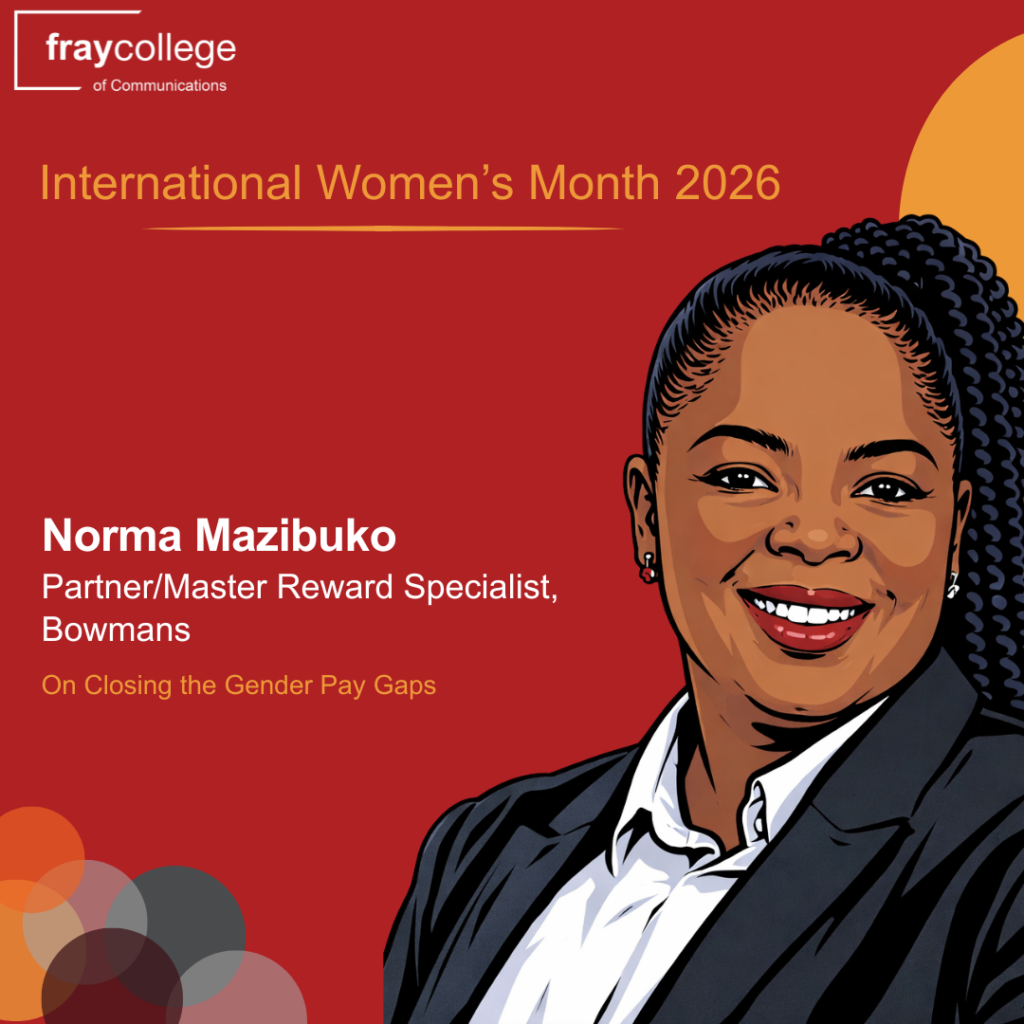
In this conversation, remuneration and governance expert Norma Mazibuko reflects on leadership, fairness in pay and the persistent challenge of the gender pay gap. She shares insights from her work advising boards and leadership teams, offering practical guidance on how organisations can design fairer reward systems, strengthen transparency and move beyond compliance toward meaningful transformation.
Part 1: About Norma
- What are you most passionate about in your role, and what part of your work gives you the most energy?
What energises me most is helping organisations think more deliberately about fairness, sustainability and long-term value when it comes to how people are rewarded. Remuneration is often seen as technical or transactional, but in reality it sits at the intersection of strategy, governance and human dignity.
The part of the work that gives me the most energy is advising boards and leadership teams on how to design reward frameworks that are both commercially sound and socially responsible. When organisations realise that fair and transparent pay practices strengthen trust, performance and reputation, the conversation shifts from compliance to genuine transformation.
2. What do you know now about being a woman in leadership that you wish you had known at the start of your career?
Earlier in my career, I spent time trying to prove that I belonged in spaces that were not always designed with women in mind. Looking back, I wish I had understood sooner that leadership is not about fitting into a predefined mould.
What I know now is that leadership is most effective when it is authentic. Qualities often associated with women, such as empathy, collaboration and long-term thinking are not weaknesses. In many ways, they are exactly the capabilities organisations need to navigate complexity and lead sustainably.
3. What is one leadership habit, ritual or mindset that has helped you stay grounded and effective, especially in high pressure environments?
For me, it is maintaining perspective. In high-pressure environments whether advising boards or navigating complex remuneration decisions, it helps to step back and ask: What outcome serves the organisation and its people in the long term?
I also believe strongly in preparation and reflection. Taking time to think deeply before engaging in difficult conversations often leads to more thoughtful and balanced decisions.
Part 2: On representation, transformation and gender sensitivity
- From your experience, how would you describe the current state of the gender pay gap in workplaces today?
There has certainly been progress in awareness and policy discussions, but the reality is that the gender pay gap remains persistent across many sectors. In South Africa, the issue is not only about equal pay for work of equal value, but also about structural disparities including representation of females at senior levels, occupational segregation, and unequal access to high-growth career paths.
So, while the conversation has advanced significantly, the outcomes have not always moved at the same pace.
- Why do you think the pay gap continues to exist despite increased awareness and policy discussions? What are some mistakes organisations make when trying to address pay inequality?
One of the key reasons the pay gap persists is that many organisations approach it as a once-off compliance exercise rather than an ongoing governance issue.
A common mistake is focusing narrowly on salary comparisons without examining the broader reward architecture, promotion patterns, performance incentives, leadership pipelines, and access to high-impact roles. Without addressing these structural drivers, organisations may correct isolated pay differences but the gap quickly re-emerges.
- What are some practical steps organisations can take to start closing the pay gap?
The starting point is data and transparency. Organisations should conduct annual pay equity audits to identify where gender pay gaps exist and understand the underlying drivers. This means not only looking at equal pay for equal work, but also analysing broader patterns such as representation by level, starting salaries, promotion rates, and participation in incentive schemes. These insights help organisations distinguish between isolated pay anomalies and deeper structural issues.
From there, organisations need to review hiring practices, promotion pathways and pay structures to ensure that decisions are fair and consistent. For example, examining whether women are being hired at lower starting salaries, whether promotion timelines differ
- Women are most likely to accept lower pay. How can we empower women to negotiate for higher, fair pay, and how can organisations improve pay transparency to achieve equal and fair compensation?
Empowering women to negotiate fair pay starts with access to information and support. When women understand market benchmarks, pay ranges and how remuneration decisions are made, they are better equipped to negotiate with confidence. Mentorship and sponsorship can also help women navigate these conversations and advocate for their value.
At the same time, the responsibility cannot rest only on individuals. Organisations must create fair and transparent systems. This includes clear salary bands, structured job grading, and open communication about how pay decisions are made.
Regular pay equity audits and leadership accountability are also important. When pay is guided by transparent frameworks rather than negotiation alone, organisations are more likely to achieve fair and equal pay outcomes.
- One of the causes for gender pay gaps is that women are overrepresented in lower-paying sectors and underrepresented in higher-paying sectors. What strategies can help create more balanced representation across industries?
This challenge starts much earlier than the workplace. It is linked to education pathways, mentorship, access to networks and visibility of role models in high-growth sectors such as science, technology, engineering, mathematics and finance.
Organisations can play an important role by investing in leadership pipelines, sponsorship programmes and targeted development initiatives that help women move into strategic and technical roles.
- What advice would you give organisations that want to support women but are unsure where to begin?
Start with honest reflection. Organisations should ask themselves whether their policies, leadership culture and reward systems truly enable equal opportunity.
Supporting women is not about isolated initiatives, it requires consistent leadership commitment, fair governance practices, and a willingness to measure progress over time. When organisations approach gender equality as a strategic priority rather than a symbolic one, meaningful change becomes possible.
