
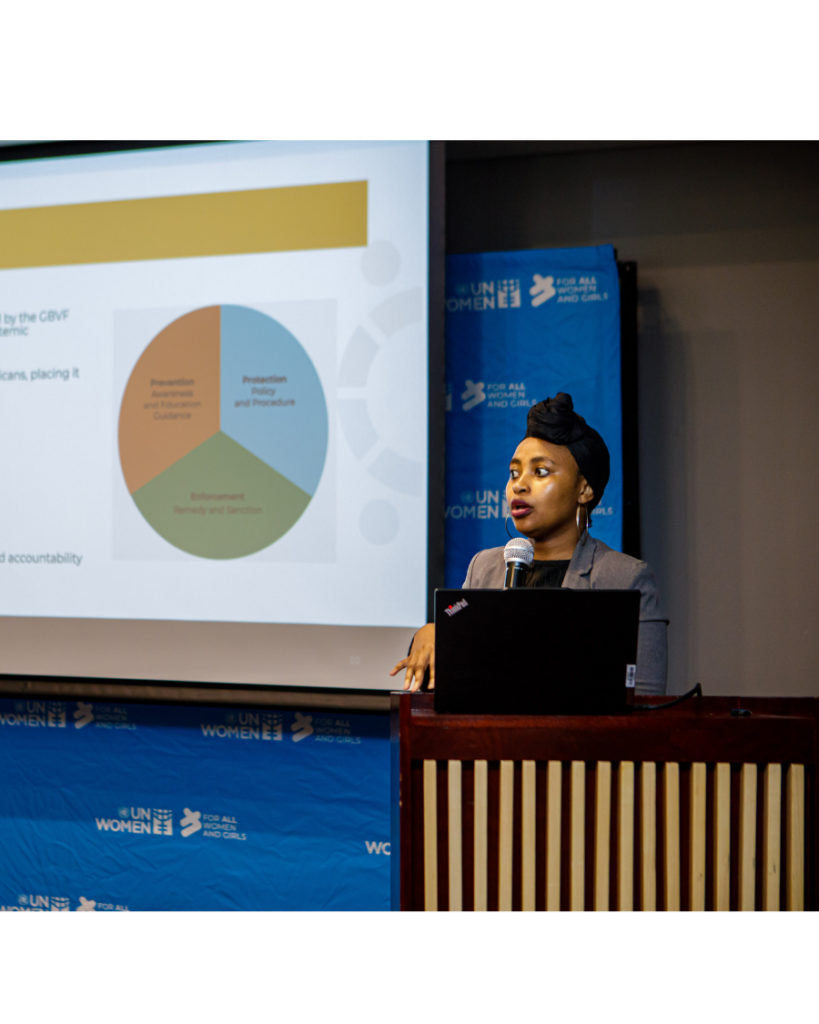
To commemorate International Women’s Day, we hosted an event featuring three masterclasses on closing the gender pay gap, addressing gender-based violence and harassment in the workplace, and examining the impact of care responsibilities on women’s economic participation and leadership opportunities. Koketso Rathumbu, Advocacy and Communications Manager at the GBVF Response Fund, delivered a masterclass on creating safe workplaces and on how to prevent and respond to gender-based violence and harassment in the workplace. She discussed the importance of the ILO Convention C190, the first international treaty that recognises the right to a violence-free and harassment-free workplace, and countries that signed the agreement must implement laws and policies to ensure safety across all industries against GBVH and bullying.
Gender-based violence and harassment (GBVH) is rooted in broader societal inequalities and power imbalances that are often reflected in workplace dynamics. Creating meaningful change starts with recognising that workplace culture is shaped by everyday actions and leadership choices, and requires intentional, systemic transformation.
Here are key takeaways from Koketso’s masterclass, Tackling Gender-Based Violence and Harassment in the Workplace:
- The ratification of ILO Convention 190 strengthens the right to a violence-free workplace, but the impact depends on effective implementation, not just compliance. Policies must be practised to ensure transformation.
- GBVH is both a human rights issue and a business issue, affecting employee wellbeing, productivity, and overall organisational performance. Addressing these issues will promote sustainable growth.
- GBVH in the workplace has economic effects. According to the ILO estimates, workplace GBVH costs 1-3% of national GDP, causing high absenteeism, turnover, and reputational harm.
- Vulnerability exists with women, LGBTQIA+ individuals, young people, migrants, and people with disabilities facing higher risks of bullying and harassment.
- Workplace bullying and harassment can take multiple forms, such as gender-based, age-based, and identity-based.
It is crucial that organisations take steps towards transformation:
- Organisations should adopt structured approaches, such as a Maturity Model, which is a clear, step-by-step way to assess, plan, and improve how they respond to GBVH.
- Leadership accountability is critical. Empathetic leaders set the tone for workplace culture and must actively drive change.
- Effective systems must be survivor-centred, ensuring safe reporting mechanisms, support, and protection from retaliation.
- Long-term change depends on embedding dignity, safety, and inclusion into everyday practices, not treating them as standalone initiatives.
- Survivor-centred workplaces prioritise emotional and legal support, offer continuous training, and ensure safe, accessible reporting channels for all employees.
Ultimately, lasting change depends on leadership accountability, survivor-centred systems, and deep cultural shifts, where dignity, safety, and equity are part of everyday workplace practices and organisational strategy.
