
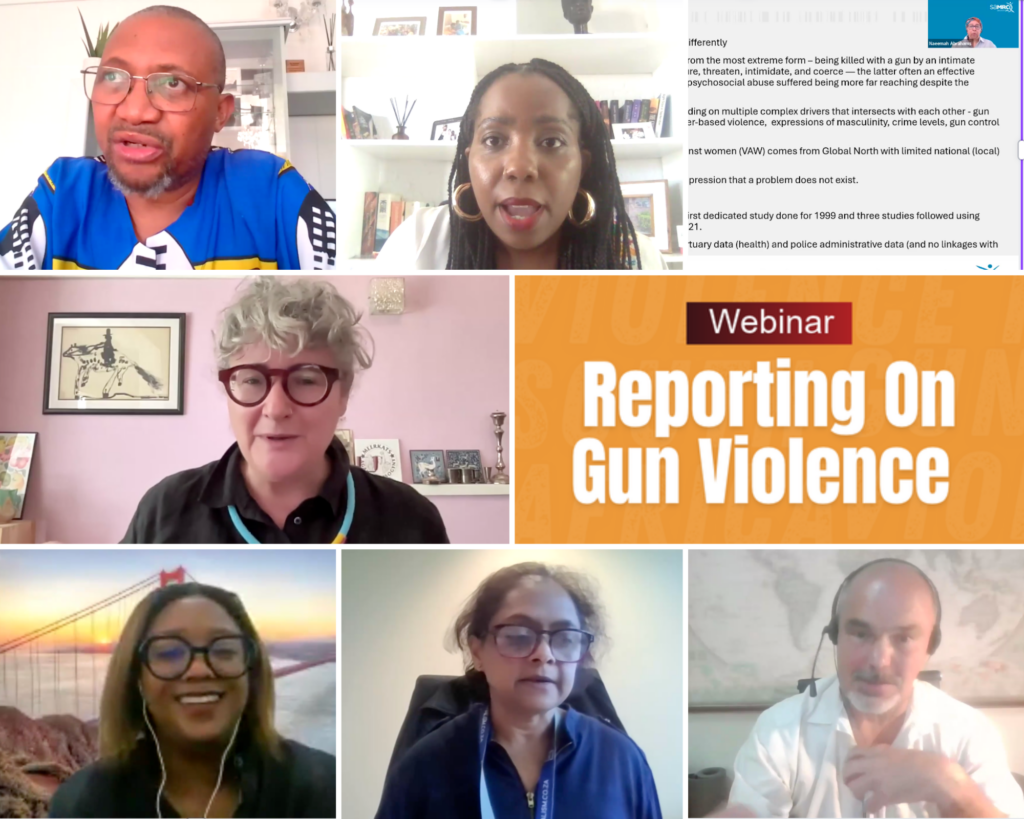
Gun violence is one of South Africa’s most serious and persistent public safety and public health challenges. Firearms now account for a growing share of killings, including of women and children. For those who survive a shooting, the harm continues through long-term disability, trauma and the heavy cost of care to an already stretched health system.
Journalists play a vital role in how the public understands this crisis. Yet after a shooting, reports usually focus on the incident: who was shot, who pulled the trigger, where it happened and why. Then the story moves on, and the next shooting is reported the same way. Each is treated as a separate event, leaving audiences with the impression that gun violence is random and beyond anyone’s control. Behind every shooting, though, is a chain of decisions and failures: how the gun was obtained, whether it was licensed and stored safely, whether warning signs were ignored, and whether the institutions responsible for firearm control did their job. As the toolkit puts it, “When journalists ask about the system, the public begins to understand that gun violence is not random, not inevitable, and not beyond the reach of intervention – or prevention.”
Introducing the Gun Violence Reporting Toolkit
To support this kind of reporting, fraycollege and Gun Free South Africa (GFSA) have launched the Gun Violence Reporting Toolkit, a practical guide for journalists covering gun violence in South Africa.
The toolkit is organised in six parts:
- Understanding guns in South Africa: history, licensing, firearm owners’ responsibilities, how guns enter illegal circulation, and the Central Firearms Register.
- Drivers and impact of gun violence: what fuels gun violence, and its effects on women, children and public health.
- Principles for reporting on gun violence.
- A reporting checklist for use before filing a story.
- Resources: organisations journalists can contact for data and expertise.
- References for further reading.
The purpose of the toolkit is to support journalists move from single-event reporting to stories that help audiences understand the systems and structures that shape gun violence. It encourages reporters to:
- Follow the gun: ask where a firearm came from, who was responsible for it, and how it ended up being used in violence.
- Follow the responsibility: look at the role of licensing, the Central Firearms Register, policing, private security and the courts, and ask who is accountable when these systems fail.
- Tell the bigger story: connect individual incidents to patterns in data, issues such as women and children safety, public health, research and policy.
- Report responsibly: use precise language, avoid sensationalism, and treat survivors and affected communities with care.
The toolkit can be downloaded or viewed here: https://drive.google.com/file/d/1SDJpxws8J7Lq20zsM12iHLlMd7idAMmY/view?usp=drive_link
